



Getting stakeholder buy-in for HR technology starts with building the business case alongside your stakeholders, not presenting it to them once it's done. Stakeholder buy-in is active support from the people who fund, approve, use, and secure the technology.
Most HR leaders have lived this. The demo goes well, the team is excited, and then the proposal stalls in finance, IT, or procurement because those teams never had a chance to shape it.
That doesn't mean the technology was wrong. Gartner research found that 74% of B2B buying groups experience unhealthy conflict during decisions, and those groups often include 5 to 16 people. Groups that reach consensus are about 2.5 times more likely to rate the outcome as high quality.
Here are six steps for HR leaders who want to earn stakeholder buy-in, from the first conversation to the final approval.
Step 1: Start with the problem people already feel
A business case for HR technology gets stronger when it opens with a problem and not a product. People rarely get excited about new software, but they will support a fix for something that already slows them down.
Before you build anything, ask stakeholders what is getting in their way. What feels urgent to HR can feel like a minor inconvenience to someone else, so learn what each team cares about most early, while there's still time to adjust your plan.
For example, Finance leaders also like to hear about the need before budgeting begins, since a request that arrives after the budget is final competes with everything already approved. They'll want the return in plain terms too: stronger retention, higher productivity, more sales, or hours saved, each one tied back to the problem you named.
Step 2: Share your business case early to build stakeholder buy-in
A finished business case often reads as a decision already made, so people sometimes hold back. Sharing an early draft invites input, and input builds ownership.
Your idea has probably lived in your head for weeks, so it feels obvious to you. For everyone else, it's brand new, and it can take several conversations before the problem and the solution land.
Three questions help in those early conversations:
- What would you need to see to support this?
- What would make you say no?
- Who else should be involved?
Invite your most likely skeptic to play devil's advocate, because they can help you spot blind spots while there's still time to fix them. Look for informal leaders too. A long-tenured teammate who's asked to help shape the rollout often becomes one of its strongest champions.
And don't forget the people who make the technology work. HRIS analysts, IT teams, and managers belong at the table early, since they'll carry the work long after the decision is made.
Step 3: Speak each stakeholder's language
HR often thinks about culture and morale, while finance often thinks about the income statement. Both views matter, and stakeholder buy-in grows when your business case can translate between them.
Each stakeholder protects something different, so the same facts need a different emphasis:
|
Stakeholder |
What they protect |
What earns their support |
Common pushback |
|
CEO |
Strategy execution |
A clear link to company goals |
Why this over other priorities? |
|
Procurement |
Terms and vendor risk |
A fair look at alternatives |
Did we commit before checking cost and contract? |
|
CHRO |
HR's credibility |
A realistic adoption plan |
Why will this succeed where past tools did not? |
|
IT |
Security and reliability |
Early involvement and an integration plan |
Is this added risk or one more system to maintain? |
|
CFO |
Capital and return |
Full costs and conservative assumptions |
Why is this better than what we have? |
|
Managers and HRBPs |
Time and attention |
Simpler work |
Is this one more tool to learn? |
Leaders at the top usually want headlines, so lead with a short summary and keep the detail in an appendix where you can reach it quickly. A dry run helps too. Ask a direct report of the decision-maker which questions they expect, and you'll walk in already knowing what's coming.
Step 4: Build an ROI story leaders can trust
A credible ROI story starts with evidence you already have access to and it helps to rank your sources in this order:
- Your own metrics, such as time spent today or turnover you already track.
- Benchmarks from peer companies and your professional network.
- Broad benchmarks across industries and company sizes.
- Vendor time-savings claims, which deserve the most caution.
Total cost of ownership belongs in the business case too, because the license fee is only part of the cost. Implementation fees, professional services, and internal staff time all add up, so ask how pricing changes at renewal and whether increases have a cap. A side-by-side comparison of a full-time hire and a contract expert can make the numbers easier to follow.
The strongest business cases still work when results arrive slowly, or only some assumptions come true, so promise a little less than your model predicts.
Connected data supports the story too. Korn Ferry research found that 71% of leaders rely on instinct over insight for talent decisions, and only 4% report high confidence when talent data is disconnected, compared with 55% when it is connected.
Step 5: Compare options and prepare for the quiet objection
A strong business case shows the full range of options. Doing nothing, working manually, choosing a lighter tool, and choosing a broader platform all belong on the page, along with the risks: what could go wrong, how you would respond, and what the fallback looks like.
Most stalled proposals also hit one of three quiet objections, each asking whether you can reach the goal without a purchase:
|
Objection |
How to respond |
|
Can our HRIS handle this? |
Focus on fit. One vendor or invoice does not guarantee one connected dataset. Decide where good enough is acceptable. |
|
Can a general AI tool do this? |
Compare data access, consistency, traceability, and governance. Get written answers on data use and controls before the approval meeting. |
|
Can we keep doing what we do now? |
Price the current state. Include time spent gathering data and the cost of late problem detection. If the honest answer is not yet, set a date to revisit. |
AI questions now come up in nearly every evaluation, so put your AI strategy in the business case from day one. Ask for a plain-language summary of how the AI works and how your data is protected, which HR, IT, and procurement can all use.
Service level agreements deserve the same early attention. Add them to the business case and not only the contract.
Step 6: Treat alignment as the first step of change management
People who help shape a decision are more likely to support the rollout, and they often defend the budget when funding gets tight. Stakeholder buy-in doesn't end at the approval stage, so build change management into your business case from the start with a few practical moves:
- Timing: Avoid launching during the busiest season for the teams affected.
- Communication: Keep messages to one or two sentences, and add a graphic.
- Support: Host optional HR office hours during rollout so questions surface early.
- Training: Plan ongoing refreshers for tools people only use a few times a year.
Then follow through after launch by measuring results against your original business case at six, twelve, and eighteen months. That builds credibility for your next request and shows stakeholders that HR holds itself accountable.
Your stakeholder buy-in checklist
Use this list to pressure-test your HR technology business case before the first formal meeting.
☐ Define the business problem in one sentence, before naming any solution.
☐ Flag the need to finance before budgeting begins.
☐ Map every stakeholder, including IT, procurement, legal, managers, and your HRIS team.
☐ Identify the real decision-maker and any informal leaders.
☐ Ask each stakeholder what they would need to see to say yes.
☐ Invite one likely skeptic to challenge the case.
☐ Rank your ROI evidence, starting with your own data.
☐ Include total cost of ownership, not only the license fee.
☐ Show the full range of options, including doing nothing.
☐ List risks, fallback plans, and AI and data security answers.
☐ Plan change management around busy seasons.
☐ Set dates to measure results against the original case.
Where a connected platform fits
A business case lands best when the technology solves a problem. Engagement data, performance goals, development plans, and recognition each tell part of the story, and leaders make better calls when they can see all four together.
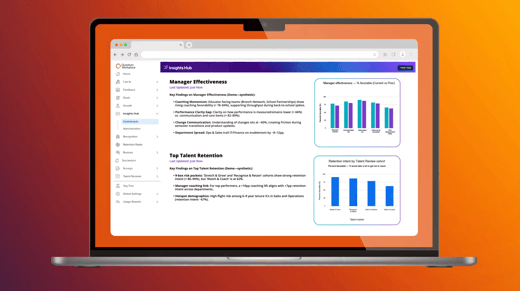
Quantum Workplace connects these four pillars so leaders can see what drives engagement, where performance is trending, and who might leave. That connected view gives finance, HR, and executives one shared set of data to discuss.

Explore the full five-part business case series
FAQs
What should an HR technology business case include?
It should include the problem, expected return, total cost of ownership, options considered, risks, and a change management plan.
When should HR start building stakeholder buy-in?
Start before budgeting begins. Early, repeated conversations help leaders accept the idea long before a formal ask.
Who needs to give stakeholder buy-in for HR technology?
Finance, IT, procurement, legal, executives, managers, and the HR team that will run the system all play a part. Invite people even if they may decline.
How do you prove ROI for HR technology?
Start with your own metrics. Add peer and industry benchmarks next. Treat vendor claims with caution, and build a case that works even when results arrive slowly.
How do you win stakeholder buy-in from a skeptic?
Ask what they need to see. Invite them to challenge the case. Then address that concern directly in the business case.
How do you keep stakeholder buy-in after approval?
Plan training and communication, then measure results against the business case at set intervals. This builds trust for future investments.
Next steps
Strong stakeholder buy-in for HR technology takes a team. Start with the problem, listen early, and show leaders what they need to say yes.
Ready to put it into practice? Get your free business case worksheets, or tour the Quantum Workplace platform to see how connected engagement, performance, development, and recognition data can support your case.