
IDI Distributors Grows Talent from Within, Across 70 Locations
Results at a glance
600+
$200–300K
<10 min
4+ Years
- About
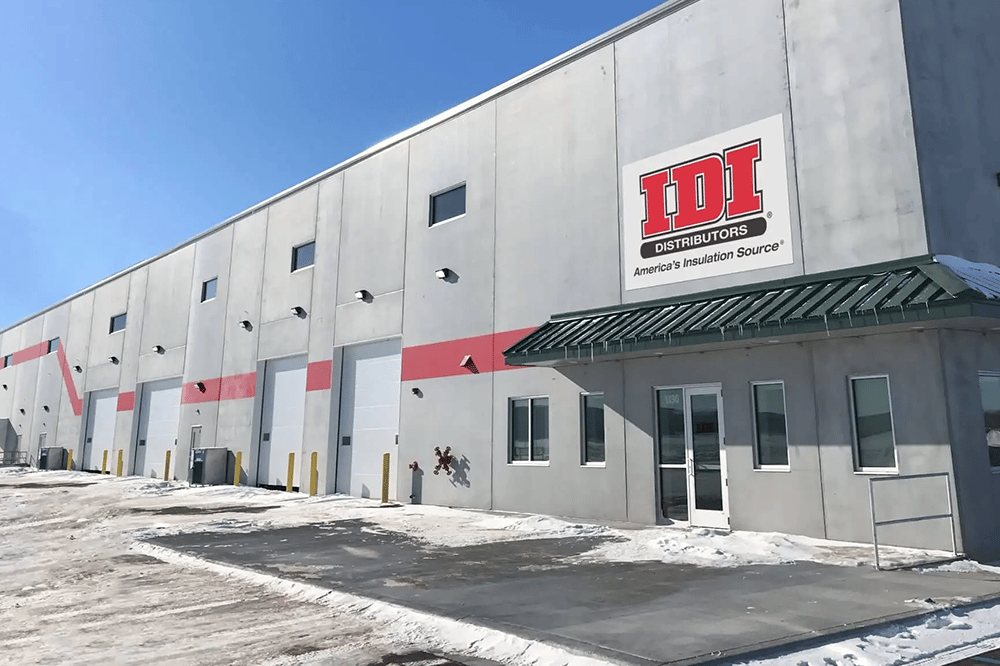
- IDI Distributors is a wholesale distributor of insulation and building materials, with nearly 600 employees across 70 locations in 44 states.
- Industry
- Building materials & insulation distribution
- Use Case
- Engagement Survey, Talent Reviews, Growth, Action Planning
IDI Distributors has spent nearly 50 years building a reputation for developing talent from within. But as a sales organization with only a couple of traditional career paths, the company faced a real challenge: giving employees in less traditional roles a clear way to grow. With a workforce spread across 70 locations and 44 states, leaders were often making big calls without the visibility they needed to back them up.
For Mark Bailey, Vice President of Human Resources, the tipping point came down to data. IDI's engagement survey ran through a tool built into its HRIS system: easy to send, but nearly impossible to make sense of once the results came back. Pulling the results together took one team member roughly 10 to 15 hours a week for a month. Frustrated, Bailey went looking for something better and found it in Quantum Workplace.
Over four years, IDI has layered Engagement Survey, Talent Review, and Growth into one connected talent strategy. The result: survey reports that take a minute instead of a month, a shared definition of talent across regional leaders, and more than 70% of leadership openings filled internally in the last two years.
The Challenge
Reports nobody had time to decipher
Before Quantum Workplace, IDI ran its engagement survey through a tool built into its HRIS system. It showed numeric results but didn't analyze them, so Bailey's team did the analysis by hand, and only at a high level. Pulling everything together took about a month, and one team member spent roughly 10 to 15 hours a week on it, on top of their other responsibilities. Even then, the results only scratched the surface of what employees were really saying.
"I got frustrated with how much time it took, and just the reliance on the person that was consolidating the data to do the assessing and make the determinations in terms of where our issues were. I knew there were better ways to do this, and we needed to find one."
— Mark Bailey, Vice President of Human Resources, IDI Distributors
A deskless workforce that's hard to reach
IDI's workforce is distributed across various locations, and many employees spend the day in a vehicle rather than at a desk. Taking the survey meant people needed to find time to come back to the branch location and physically sit down at a computer.
Talent decisions made in silos
With about 600 employees spread across 70 locations in 44 states, IDI relied heavily on regional leaders to assess who had potential and who was ready for what came next. That worked to a point. HR partners talked with leaders often, but the leadership team as a whole had no shared view of how people felt about their teams, and no common criteria for talent promotion. Those calls weren't tied to IDI's leadership competencies, which made it hard to see where talent really sat, what people wanted to do next, or who was open to relocating.
A thin talent bench and an expensive fix
About a decade ago, a stretch of rapid growth depleted much of IDI's internal bench, and the rebuilding that followed wasn't very strategic. By 2021, the company was spending close to $800,000 on third-party recruiters for leadership and sales rep roles. Most of those hires left within one to two years, in Bailey's view because the recruiters didn't understand IDI and didn't have a vested interest in the match.
Narrow paths for growth-minded employees
As a sales organization, IDI has only a couple of clear, traditional career paths. Employees outside those paths, especially in more specialized or non-traditional roles, kept telling HR the same thing: they wanted more access to tools and resources that could help them grow within their current role, and consider what might come next.
“I kind of had a vision of what I wanted the output and the reporting to look like, and then an action planning component to go along with it. The integration of action planning was really great, a bonus is that we can give them access to it without us having to do a whole lot of data manipulating.”
The Solution
When IDI first partnered with Quantum Workplace, the company was essentially building its talent strategy from scratch. Development had happened organically, and engagement ran on a separate tool that wasn't effective. Bringing both into one connected talent platform meant the pieces could finally inform one another.
A consultant pointed IDI toward Quantum Workplace, and Bailey came to the evaluation with a clear picture of what he needed: reporting and analytics that didn't require a data analyst to interpret, action planning built directly into the platform, and an easy way to hand managers access to their own team's insights without HR playing the middleman. Quantum Workplace also offered something IDI hadn't had before: a simple way to gather upward and 360 feedback.
By the end, Quantum Workplace checked every box on Bailey's list and fit comfortably within budget. He called it a very easy decision.
"Once we're ready to close the survey out, we can turn around the results within the next minute and send a report to a team or to a leader of exactly what their team said, and then slice the data dozens of different ways. It's a night and day difference with Quantum Workplace, and it has saved us a tremendous amount of time."
The Results
Survey reports delivered in a minute, not a month
IDI's HR team can now watch responses come in while a survey is still live. Once it closes, they can send a report to a team or leader in about a minute, then slice the results in dozens of different ways. The previous manual report process, and the 10 to 15 hours a week it took from one team member, is now replaced with Quantum Workplace’s intelligent analytics.
Survey participation reached 90%
Employee participation has held in the 90s throughout the partnership, even as IDI moved away from gift card incentives. The company has since phased the incentive out, and last year's participation, was still 90% across about 600 people. Launching surveys from Quantum's survey platform instead of from an IDI email helped employees trust the process.
Action Planning that gives managers a place to start
For managers at IDI Distributors, the action planning tool feels like a continuation of the survey they just took. They get their report and a curated list of suggested focus areas they can customize. When it's time to write the plan, AI-generated suggestions tied to what surfaced in the survey mean they aren't starting from a blank page. Bailey's focus now is making sure leaders at every level build a routine of coming back to those plans, talking about progress, and updating them.
"Without the AI suggestions, I think we'd find that people either took the path of least resistance or they chose the wrong thing. We can now help work with them to make sure that the plan actions they're choosing are really connected to the issues that are most important to their team."
— Mark Bailey, Vice President of Human Resources, IDI Distributors

A shared language for talent reviews
Talent Reviews have given Bailey and IDI's regional leaders a shared definition of talent, anchored in the company's leadership competencies and core values. Leaders now evaluate people against common criteria instead of making promotion calls in silos. The payoff, Bailey says, is consensus on someone's readiness and fit for a role, which results in leaders who are better prepared for the job, less ramp-up time, and better retention. As he puts it, it feels like everyone is “reading off the same page.”
"Being able to have access and visibility into the entire organization, has just led to better conversations and more intentional talent development of those that we're all aligned around.”
A Growth rollout built on credibility
IDI ran a pilot of Growth for around 20 employees, for roughly six months, in a region with a strong track record of internal development and succession planning. People there were hungry for a tool like this. Leaders completed their own growth plans first, then talked openly with their teams about what was on them. At last year's national meeting, a pilot participant stood up and shared how he used his own plan, and those testimonials helped show the broader company that it worked effectively.
IDI made Growth optional because, as Bailey puts it, it "can't just feel like another task that's been assigned by their manager." Eligibility is tied to Talent Review: employees are invited if they land in the "promotable" group or the "recognize and retain" group. That covers all exempt roles, plus the non-exempt roles that most often lead to an exempt position. About half of the people invited have already opened their growth plan and started.
The growth plan itself is quick. Bailey estimates that writing out where you are now, where you want to go, your focus areas, and specific actions would previously take an hour or more, if it happened at all. Now the pre-compiled questions in the system fill in about 80% of it, employees can customize the rest, and a growth plan takes under 10 minutes, which saves employees a lot of time.
Growth woven into how leaders already work
IDI's leaders already held regular check-ins with their direct reports built around four standing questions, one of which asked what the employee was working on for their development. For people with a growth plan, that question became an invitation to review and update their plan. The most recent round of conversations brought a lift in growth plan execution, because employees came prepared to talk it through with their leader.
"The more we can embed growth plans into some of our existing processes, the more likely we are to have those stories of, ‘here's how it helped me develop.’"
— Mark Bailey, Vice President of Human Resources, IDI Distributors
A software partner who listens
Bailey's praises Quantum Workplace for how open the product and customer success team are to customer feedback. IDI has joined several pilots, and he has watched input from his team show up in the product, often almost in real time. Throughout the year, his customer success manager checks in to make sure the tools are working and to preview what's coming, and he gets same-day, thoughtful answers from the people behind the projects IDI has partnered on.
The Impact
- $200,000 to $300,000 in estimated savings from filling leadership roles internally instead of through outside agencies.
- More than 70% of leadership roles in IDI's field and corporate offices filled internally over the last two years.
- Engagement participation of 90% or higher across about 600 employees, without relying on incentives.
- Survey reporting that once took 1 month of manual work now takes a click, with team reports delivered in about a minute.
- Growth plans that would have taken an hour or more now take under 10 minutes, and about half of invited employees have already started.
- 600+ employees across 70 locations and 44 states now sit within one connected view of engagement, talent, and growth.
Looking ahead
Entering their fifth year of partnership with Quantum Workplace, Bailey is candid that IDI's talent strategy is still a work in progress, and he sees that as the point. His advice to other HR leaders about building a similar culture of development starts with patience: get clear on what you're trying to accomplish, then build one piece at a time.
For IDI Distributors, growth isn't a program bolted onto HR anymore. It's becoming part of how the whole company operates. And with Quantum Workplace connecting the dots, Bailey and his team finally have the visibility, and the confidence, to keep building it.
"My biggest plug for the Quantum Workplace team is just how open and receptive they are to the feedback of their customer base. To be honest, I haven't experienced that with any other software vendor that we work with."