



Performance reviews have a bad reputation. Employees see them as a report card, and managers see them as one more form to fill in. But with the right employee performance review questions, a review becomes a conversation that improves retention, engagement, and performance, and anchors your performance management program.
This guide gives you 47 performance review questions to use in your next review cycle. They're grouped by topic, from results and strengths to career growth, feedback, and wellbeing, so managers and HR leaders can choose the ones that fit each conversation.
The short answer: the best performance review questions are open-ended, specific, and balanced between looking back and looking ahead. Start with accomplishments, move to strengths and challenges, then cover goals, feedback, and support. Choose 8 to 12 of the 47 below for each review rather than asking them all.

How to use these performance review questions
Managers aren't only evaluators. They know the work, the context, and what each person can do. Good questions help them coach with that knowledge instead of just scoring it. A few habits make the questions work harder:
- Choose 8 to 12, not all 47. Pull from at least three groups so the conversation covers past results and future plans.
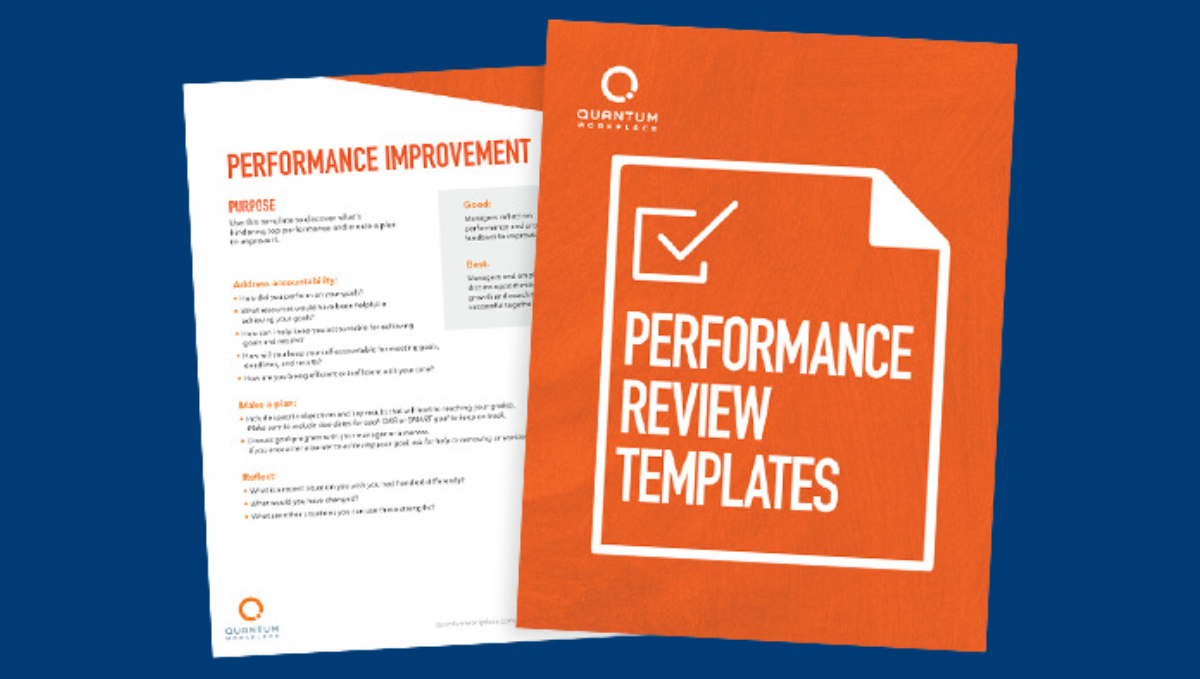
- Share the questions in advance. People answer better when they have time to think. Send them a week ahead, or collect self-reflections first with a performance review template.
- Ask, then listen. Follow each answer with "Tell me more" or "What would help?" before moving on.
- Leave no surprises. Nothing in the review should be new to the employee. Feedback belongs in the weeks before it, not only in the meeting.
- Write down commitments. Finish with agreed actions and dates so the conversation leads somewhere.
Performance review questions: who asks what
Not every review runs the same way. Use this table to match the numbered questions below to the conversation you're having.
|
Conversation |
Who asks |
Start with |
|---|---|---|
|
Manager-led review |
Manager asks employee |
Q1–12 for results and strengths, then Q13–18 and Q24–28 |
|
Employee self-review |
Employee answers in writing before the meeting |
Q1, 2, 6, 10, 11, 13, 17 and 37 |
|
Questions to ask in a performance review (employee to manager) |
Employee asks manager, reworded in the first person |
Q14, 15, 18, 24, 27 and 28 |
|
Upward feedback on the manager |
Employee answers about their manager |
Q24–32 |
|
360 or peer feedback |
Colleagues answer about a teammate, reworded in the third person |
Q6, 9, 33, 34 and 35 |
|
Mid-year check-in or 1-on-1 |
Either person |
Q3, 4, 12, 43–47 |
For example, Q18 ("What would it take for you to reach the next level in your role?") becomes "What would it take for me to reach the next level?" when an employee asks it. Self-review wording help is in QW's 50+ self-review examples.
Swap weak performance review questions for stronger ones
Yes/no questions end the conversation. Open-ended ones ask for examples, and examples are where managers learn something new. These are the most common swaps:
|
Instead of |
Ask |
|---|---|
|
How would you rate your performance this quarter? |
Q1: What accomplishments this quarter are you most proud of? |
|
What are your biggest strengths? |
Q6: What personal strengths help you do your job effectively? |
|
Where do you see yourself in five years? |
Q14: What do you want your next position at this company to be? |
|
Do you get enough feedback from me? |
Q24: What type of feedback has been the most actionable for you? |
|
Are our one-on-one meetings helpful? |
Q32: What do you need more of, or less of, from me over the next quarter? |
|
Do you understand the company's goals? |
Q19: Reflecting on our mission, how do you see your role evolving? |
|
Are you satisfied with your job? |
Q36: Which job responsibilities do you enjoy most, and which least? |
|
Is something holding you back from doing your best work? |
Q30: Do you have the tools, training, and resources you need? |
What a better performance review conversation sounds like
A standard review:
Manager: "You hit your sales targets, but your client feedback scores need improvement. Work on that next quarter."
Employee: "Understood. I'll work on it."
An engaging review:
Manager: "You've hit your sales targets consistently. What's behind that steady performance?"
Employee: "Mostly understanding what each customer needs. Difficult clients are harder, though."
Manager: "That's a real strength. Want to look at some communication strategies for tougher conversations? I'd also like to hear about your career goals and how I can help."
Employee: "I've been thinking about leadership roles."
Manager: "Great. Let's map out a few development steps tied to your day-to-day work."
The first version hands down a verdict. The second recognizes a strength, asks about the obstacle, and opens a career conversation. For more wording ideas, see our 170+ performance review examples, phrases, and comments.
Employee performance evaluation questions: results and strengths
Start with the big picture. These employee performance evaluation questions cover what the person achieved, what drives them, and where they do their best work.
Performance review questions on overall performance (Q1–5)
- What accomplishments this quarter are you most proud of?
- Which goals did you meet? Which fell short?
- What motivates you to get your job done?
- What can I do to make your job more enjoyable?
- What are your ideal working conditions to be most productive?
Performance review questions on strengths and challenges (Q6–12)
Strengths questions show what to build on. Challenge questions show where support will help most. Ask both, and ask the strengths first.
6. What personal strengths help you do your job effectively?7. What makes you the best fit for your position?
8. What skills do you have that we could use more effectively?
9. What kind of work comes easiest to you?
10. Which goals or deliverables were you least proud of? Why, and how will you approach them differently next time?
11. What two or three things will you focus on next quarter to grow and develop?
12. What can I do to help you better meet your goals?
Performance review questions on goals, growth, and alignment
These questions look forward. They turn a review into a plan and connect each person's performance goals to where the company is headed.
Performance review topics: goals, career growth, and skill development (Q13–18)
13. What are your most important goals for the next quarter?14. What do you want your next position at this company to be? How would your responsibilities change?
15. What professional growth opportunities would you like to explore to get there?
16. What type of career growth matters most to you?
17. Which skill, if you built it over the next six months, would make the biggest difference to your performance?
18. What would it take for you to reach the next level in your role?
Performance review questions on alignment with company goals (Q19–23)
Employees do better work when they can see how it connects to the mission. These questions make that link explicit.
19. Reflecting on our mission, how do you see your role evolving to contribute to our collective success?20. In what ways can we better align your talents and interests with our strategic objectives?
21. How do your current projects support our mission, and what new initiatives could increase that impact?
22. Which part of the company's vision excites you most, and how can we shape your objectives around it?
23. Do you see any gaps between your personal goals and the company's direction? How could we close them?
Performance feedback questions: feedback, manager support, and teamwork
Feedback should flow in both directions. These performance feedback questions help managers learn what is working, and they give employees a safe way to say what isn't.
Performance feedback questions on recognition and growth (Q24–28)
24. What type of feedback has been the most actionable for you, and how can we make it even more impactful?25. When we discuss project feedback, which parts help you grow, and which parts could we improve?
26. Can you share a time when feedback led to a positive change in how you work?
27. How can we improve the way we recognize your accomplishments?
28. How can I better support you in turning feedback into results?
Performance review questions for employees about manager support (Q29–32)
Good managers ask what they could do better. These four questions invite honest upward feedback, which also makes the rest of the review more candid.
29. What is one thing I do that helps you do your best work, and one thing I could do differently?30. Do you have the tools, training, and resources you need to do your job well?
31. How comfortable do you feel bringing me new ideas, questions, or concerns?
32. What do you need more of, or less of, from me over the next quarter?
Performance review questions on collaboration and teamwork (Q33–35)
33. Which teammates or teams do you work with most effectively, and what makes that partnership work?34. Where do handoffs or collaboration break down, and what would fix them?
35. How do you usually respond when a colleague gives you critical feedback?
Performance review topics: role fit, wellbeing, and wrap-up
The last group covers the parts of a job that ratings miss: what energizes people, what drains them, and what they still need to say.
Performance review questions on role satisfaction and individual needs (Q36–42)
Generic questions get generic answers. The first four apply to everyone. The last three are examples of role-specific questions you can adapt for your own teams.
36. Which job responsibilities or tasks do you enjoy most? Which do you enjoy least?37. How do you think your role helps the company succeed?
38. What do you like least about your current role? What would you change?
39. What do you like most about working for this company?
40. For the creative marketer: What innovative marketing strategies are you eager to explore this quarter?
41. For the tech specialist: Which emerging technologies could take our systems to the next level?
42. For the customer service professional: What customer feedback have you received that sheds light on our customer experience, and how can we act on it?
Performance review questions on wellbeing and engagement (Q43–45)
43. How manageable is your current workload, and what would make it more sustainable?44. When do you feel most engaged at work, and when do you feel least engaged?
45. What is one change that would make you more excited to come to work?
Performance review questions to wrap up (Q46–47)
46. Is there anything we haven't covered that you'd like me to know?
47. What is one commitment each of us will make before our next check-in?
From conversation to action: following up with employees on their performance reviews
The review doesn't end when the meeting does. The value comes from what happens next, so build performance review follow-up into your performance review process from the start:
- Send a short summary within a week. List what you agreed, who owns each action, and the dates.
- Provide what you promised. If an employee asked for training, a stretch project, or more feedback, schedule it.
- Check in on a regular schedule. Monthly or quarterly check-ins keep goals current and make the next review easier.
- Keep the conversation going. Feedback and development talks belong in everyday work, not once a year.
How Quantum Workplace helps you run better performance reviews
Good questions are the start. Quantum Workplace's performance review software helps your managers prepare, run, and follow up on reviews with reliable context, so conversations are more objective and more useful.
|
|
1. Customize reviews to fit your needs.Easily measure what you want, when you want with flexible review modules that you can tailor to fit the needs of your culture and the various groups within it. |

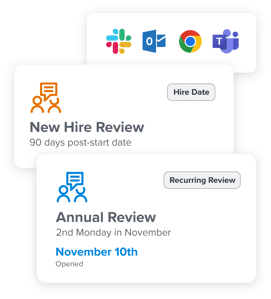
2. Help your managers build positive performance habits.Make it easy for manager to coach to performance by integrating your process into their existing workflows. Set up formal conversation cycles to create the right frequency and consistency of touch points. |
|
|
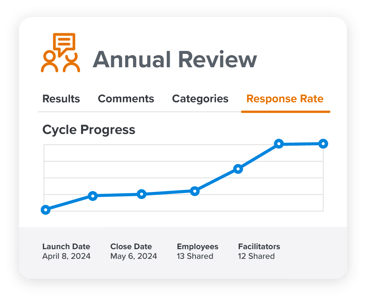
3. Easily track review response rates.See the status of each review cycle to help your teams stay accountable and monitor performance ratings in real-time. |
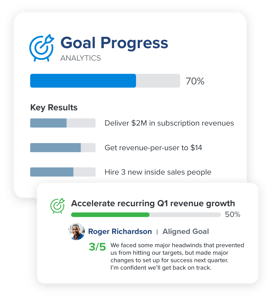
4. Embed performance goals directly into reviews.Our platform makes it easy to include goals as part of performance evaluations—and helps coach managers have objective, effective, and growth-oriented conversations. |
|
|
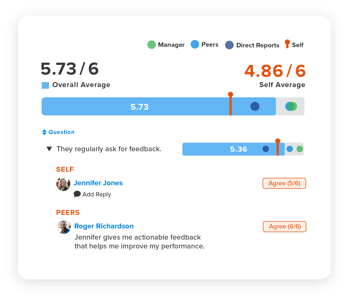
5. Orient reviews around multi-rater feedback.Incorporate feedback into your review cycles to gain valuable insight from the individuals your people work with most, and better orient performance conversations around development. |
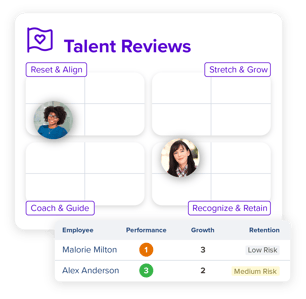
6. Visualize and align on performance data across teams.Get a comprehensive view of your organization’s talent with our talent dashboard. Zoom out and see the big picture, to help you make more informed decisions on how to keep and develop your best talent. |
 |
Ready to see it in action? Request a demo or take the product tour to see how Quantum Workplace turns review questions into better performance conversations.
Conclusion
The right performance review questions change what a review feels like. Instead of a report card, employees get a conversation about their strengths, their goals, and the support they need. Managers get honest input on how they can lead better.
Pick a handful of the 47 questions above, share them ahead of time, and follow through on what you agree. Do that consistently, and reviews become one of the most useful conversations your managers have.
Performance review questions FAQS
What are the best performance review questions?
The best performance review questions are open-ended and ask for examples. Strong starters include Q1 (accomplishments), Q6 (strengths), Q14 (next role), Q24 (useful feedback), and Q29 (how the manager can help).
What questions should employees ask in a performance review?
Employees can ask about growth, feedback, and support: "What would it take for me to reach the next level?" (Q18), "What type of feedback would help me most?" (Q24), and "How can you help me meet my goals?" (Q12). Q14, 15, 27 and 28 also work reworded in the first person.
What are good self-review questions for employees?
Use Q1, 2, 6, 10, 11, 13, 17 and 37. They ask employees to reflect on achievements, misses, strengths, goals, and how their role helps the company.
What are performance review questions for achievements?
To assess achievements, ask Q1 (what are you most proud of), Q2 (which goals did you meet or miss), and Q10 (what are you least proud of, and why).
What are performance review questions for strengths and areas of improvement?
Q6–12 cover both. Pair a strengths question with a challenge question so the discussion stays balanced, and finish with Q12 so the manager commits to helping.
What are performance review questions for career growth?
Q13–18 focus on goals, next roles, and skills. Q14 (next position) and Q18 (what it takes to reach the next level) are the two most useful for planning promotions and development.
What are performance feedback questions?
Performance feedback questions ask how feedback is given, received, and acted on. Q24–35 cover recognition, manager support, and teamwork, and work for both manager-to-employee and upward feedback.
How many questions should you ask in a performance review?
Choose 8 to 12 from the 47 above, spread across at least three groups. That leaves time for follow-up questions, which usually produce the most honest answers.
Make your performance review process more effective, efficient, and engaging. Quantum Workplace's performance review software helps your managers and teams prepare for, facilitate, and follow up for better reviews and better performance.