


.webp?width=500&height=281&name=Employee%20Engagement%20Trends%202026%20(4).webp)
Build Confidence:
Outlining a Clear and Achievable HR Tech Implementation Plan
A strong business case doesn’t stop at ROI. Before stakeholders approve the investment, show them where you’ll start, who will do the work, how you’ll support adoption, and what early value will look like.
This is Part 4 of a five-part series on building the business case for a connected talent platform. If you’d like to be the first to know when a new section is released, subscribe to the series.
PART 5
Put it Together:
Nailing Your Proposal
Releases Oct. 8
A strong business case has to answer two questions:
Is this worth doing?
And can we actually pull it off?
Stakeholders want to know whether the organization has the time, people, data, and support to turn the investment into something leaders will actually use.
That concern is fair. In Sapient Insights Group’s annual HR systems survey shows how often HR technology implementations miss expectations around timeline, resourcing, and adoption.
1 in 4
organizations fall short of HR technology implementation expectations
around timeline, resourcing, and adoption
You don’t need a 75-line project plan to earn approval. But you do need to show that you’ve thought beyond the purchase:
- What still needs to be decided?
- Which data and systems are involved?
- Who will do the work?
- How will you prepare people for the change?
- How will you know it’s working?
That’s enough to give stakeholders a clear view of where you’ll start, what has to happen first, and how the investment will begin creating value.
Hit the ground running.
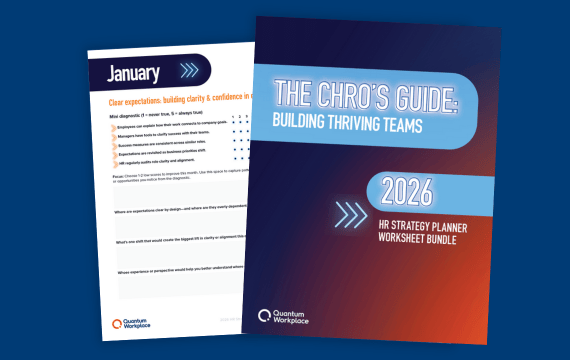
Use our free workbook to build a connected talent platform implementation plan into your proposal.
Define what early value looks like.
Start with what the platform should improve first—not everything it could eventually do. If you haven’t defined that outcome yet, revisit part two of this series: From Principles to Proof: Building a Defensible Case for HR Software ROI.
One HR technology buyer described the discipline this way:
"Always start with the business problem you're trying to solve, not the technology. Define the pain point, the outcome you want, and how you'll measure success before you evaluate a single solution — otherwise you end up reverse-engineering a justification for a product you already like."
VP of Operations at an SMB marketing technology company
Implementation and value aren’t the same thing.
“Launch a new performance management process” is a deployment milestone. "Help managers lead more contextual and effective quarterly coaching conversations” describes what should get better because of the tech.
Once you’ve named your outcome, work backward. Decide which behavior, workflow, or decision needs to change, who should benefit, and what they need to see or do that they can’t today. Then identify the talent and business signals required to make that possible.
Be honest about what the first phase can deliver. Don’t promise predictive insight across the employee lifecycle when you’re still establishing the clean, consistent data needed to get there. Measure progress by what improves—not how many modules you launch.
Plan to resolve business decisions before configuration.
Once you know what should improve first, identify the decisions you must make before you can build toward it.
Some of the hardest implementation decisions have nothing to do with the software. Your team still has to decide when performance conversations will happen, how goals will be set, whether to use ratings, and how performance should connect to compensation and development. The platform can support those choices, but it can’t make them for you.
A connected talent platform raises another set of questions. Which data should flow into it? How will you handle shared fields and definitions? Who can see sensitive information? Which signals make sense to use together?
These aren’t minor details. If “high performer,” “critical role,” or “retention risk” means something different across systems or business units, connecting the data won’t fix the confusion.
“Even small choices made in implementation can limit what’s possible later. For example, if you change a survey scale, shift the cadence, or let every business unit define its own terms, you may make it harder to benchmark results, follow trends, or compare engagement and performance later.”
Jarah Banks, VP of Implementation & Support at Quantum Workplace
You don’t need to settle every question before asking for approval. You do need to flag the decisions that could change the scope, order, or timeline and show when they’ll be resolved. Open decisions don’t make the plan look weak. Hidden ones are what create problems later.
Sequence the rollout around value and dependencies.
With those decisions and dependencies visible, you can put the work in a realistic order.
You don’t need an exact date for every phase yet. A simple now / next / later roadmap gives stakeholders enough to understand where you’ll start and how the platform will grow from there.
|
|
|
|
Now |
What problem do we need to solve first? |
|
Next |
What should we add or connect to make that first step more useful? |
|
Later |
What becomes possible once the earlier pieces are working? |
Then put that roadmap next to reality. Look at your talent calendar, business deadlines, integration work, leadership readiness, and how much change people can reasonably take on.
The use case with the greatest potential value may not be the right place to start. Some outcomes depend on practices and data you need to establish first. The order will depend on the problem you’re solving. For example:
- If you want managers to lead more effectively, start with clear goals, regular 1-on-1s, and better performance conversations. Add engagement data once managers have a process for using what they learn.
- If you want to improve succession planning, start by getting managers and employees into a better rhythm around growth. Then bring in performance and talent review data to help leaders make more informed choices.
- If you want to reduce regrettable turnover, start by listening for where risk is building. Add performance, potential, and growth data to understand where you need to act first.
Sometimes the use case that sold you on the platform belongs in phase two or three. That’s okay. Stakeholders are more likely to trust the plan when you can explain what needs to happen first and why.
For more examples, download Connecting Your Talent Data for Stronger People Decisions. It maps out practical starting points for building better managers, identifying and developing top talent, and keeping your best people.
Hit the ground running.
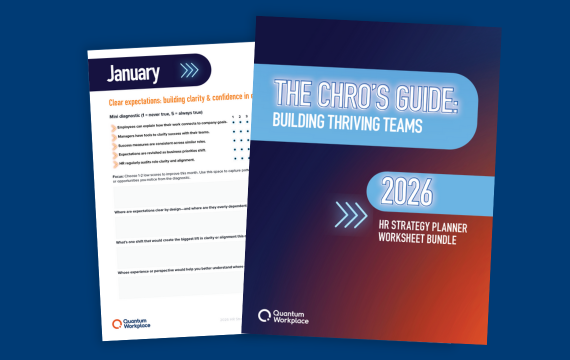
Use our free workbook to build a connected talent platform implementation plan into your proposal.
Make ownership and commitments visible.
A sequence of events becomes a real plan when you attach people and time to it.
Vendor implementation plans are usually clear about what the vendor will handle and much less clear about what they’ll need from you. It’s up to you to fill in that side of the picture—although a good partner should be willing to jump in and help you think through your plan.
Name the executive sponsor, the person running the project day-to-day, and the vendor contacts involved. Depending on the size and complexity of the rollout, you may also need HR process owners, IT or HRIS partners, data owners, and manager representatives.
For every use case in your roadmap, clarify who owns the data, who interprets what it shows, and who is responsible for acting on it.
Then estimate the time required for each step. It won’t be perfect, and it doesn’t need to be. Even a rough view by role or phase is better than treating internal capacity as free.
Treat the plan as an agreement your internal team and vendor can keep coming back to. Review milestones together, raise problems early, and agree on what “done” means at each stage. One person should also stay responsible for the original business problem and ROI case so they don’t get lost once implementation begins.
Treat adoption as its own workstream.
Defining clear ownership will help you get the platform launched. But your success at driving adoption will determine whether it changes anything.
One HR director described two distinct moments in the change process:
“It’s important that not just one team or area benefits, so you have to think about the impact to the greater good. Upfront it is change management with leadership, but before go-live it is change management with the users.”
HR Director at a mid-sized election technology company
Our change management framework offers a useful way to break down that work:
- Prepare the groundwork. Get leaders aligned on why the change is happening, what success looks like, and how they’ll support it.
- Empathize with employees. Talk to the people affected. Find out what they’re worried about, what they need, and what would make the change useful to them.
- Ignite the change. Test the process with a small group of managers and employees. Let them find the rough spots and help others prepare.
- Market and enable the change. Explain what’s changing through the channels people actually use. Then give them the training, resources, and support to do their part.
- Reinforce the change. Pay attention to how people are using the platform after launch. Recognize progress, ask for feedback, and step in where adoption is lagging.
None of that fits into one launch email. Prosci found that projects with excellent change management were eight times more likely to meet their objectives than projects with poor change management.
You also have to be realistic about capacity. Gartner found that 73% of HR leaders say employees are already tired of change, and 74% say managers aren’t prepared to lead it. Those are the same people you’re counting on to make the rollout work.
73%
of HR leaders say employees are already tired of change
74%
of HR leaders say manager aren’t prepared to lead change
8X
HR digital transformation projects with excellent change management are 8X more likely to meet their objectives than projects with poor change management.
Click-path training is not manager enablement. Showing managers where to find a feature won’t teach them how to set a useful goal, give feedback someone can act on, coach a performance problem, or respond to a new insight about their team.
Managers need practice with the decisions and conversations the platform is supposed to improve. They also need help understanding what the data can tell them, what it can’t, and what to do next.
Give every group impacted a reason to care. If employees see another tool to learn while HR gets all the value, adoption will stall. No launch campaign can make up for that.
Have a plan to measure the path to value.
Adoption is an early sign of progress, but it isn’t the outcome you built the business case around.
Go back to the ROI case you used to justify the investment. The outcomes you promised there should become the measures you follow after launch.
For each one, document where you’re starting, what you expect to change first, which business measure should eventually move, where the data will come from, who owns it, and when you’ll review it.
Say productivity is the goal. You might track revenue, output, roles filled, or cycle time while also watching whether employees understand what’s expected, goals are becoming clearer, and managers are having more useful performance conversations.
For retention, look at turnover by role, team, or manager alongside signals such as future outlook, growth opportunity, and manager effectiveness. The business result may take time to move. These earlier signals can tell you whether you’re heading in the right direction.
Don’t add a precise percentage target just because the proposal feels stronger with one. If you don’t have a baseline, calculation, timeline, or owner behind it, call it a working hypothesis. You’re not trying to prove on day one that the platform caused a business result. You’re deciding what evidence would strengthen the original case—or tell you that something needs to change.
Put value reviews on the calendar before launch, including one after the next major talent cycle. If you wait until later, the original outcomes and owners may already be fuzzy.
Prosci found that 81% of participants who planned reinforcement or sustainment activities met or exceeded their project objectives. If you wait until later to decide how you’ll follow up, the original outcomes and owners may already be fuzzy.
81%
of HR digital transformation projects
with planned reinforcement or sustainment activities
meet or exceed project objectives
For a connected talent platform, track one more moment: the first time a leader uses a connected insight to make a real decision. Capture what they saw, what they decided, and what they did next. That’s time to value—not simply getting several modules live.
Pressure-test the plan before finalizing.
Once you’ve outlined the plan, use it to see how each vendor thinks—not only what they promise.
Implementation and adoption came through clearly in our survey of HR leaders as part of the buying decision, not something to sort out after signing. Respondents wanted a realistic timeline, clear responsibilities, training and documentation, a named contact, and help planning for adoption. The vendors that impressed them brought those things up before anyone had to ask.
A long implementation checklist may look reassuring, but it can still be the same checklist every buyer gets. Pay attention to whether the vendor asks enough questions before recommending a plan. Do they understand the business problem, how your team works, what else is competing for attention, and where you’re likely to get stuck?
A good partner will also tell you when something doesn’t add up. They’ll call out dependencies, question an unrealistic timeline, and explain the tradeoffs behind their recommendations—even if that makes the sale more complicated. They should also be willing to introduce you to the people who will support you after signing.
Ask:
- Based on what you know about our business, where would you start and why?
- What assumptions about our people, data, and decision-making are built into this timeline?
- Where do you think this rollout is most likely to get stuck?
- What will your team own? What will you need from ours?
- Who will work with us after signing, and can we meet them now?
- What happens if our priorities, timing, or scope change?
- How will we measure adoption and early value?
- What support continues after implementation?
Listen for specifics. If every customer gets the same timeline, the vendor brushes past obvious risks, or the real planning won’t begin until after you sign, you don’t have enough information yet. Look for a partner who understands what it will take to create value in your organization—not one focused only on getting you live.
Conclusion
Signing the contract won’t connect your talent data or change a single decision.
Stakeholders don’t need every detail solved before they approve the investment. They need to see that the organization has a realistic way forward: a clear place to start, people who own the work, and a plan for showing whether it’s working.
That gives your team a path from buying a connected talent platform to helping leaders make better people decisions with a fuller picture.
About the Series
.png?width=441&height=400&name=Image%201%20(1).png)

Part 2
Principles to Proof:
Building a Defensible Case for HR Tech ROI
How to articulate the problem with your own data and context and set targets that hold up under scrutiny.

Part 3
Win the Room:
Getting Stakeholder Buy-In for HR Technology
What each seat at the table needs to hear—and what to say when the questions and objections start coming.

Part 4
Build Confidence: Outlining a Clear and Achievable HR Tech Implementation Plan
How to develop a launch plan with achievability and accountability in mind.

Part 5
Put it Together: Nailing Your Proposal
Tips for building a bulletproof proposal that any stakeholder can understand and get behind.
See the value of our connected talent platform.
Take a self-guided tour to see how you can give your leaders the context, clarity, and confidence to make better talent decisions.